WHY MARBELLA
WHY MARBELLA
17+
years of industry experience in providing legal solutions
17+
years of industry experience in providing legal solutions
17+
years of industry experience in providing legal solutions
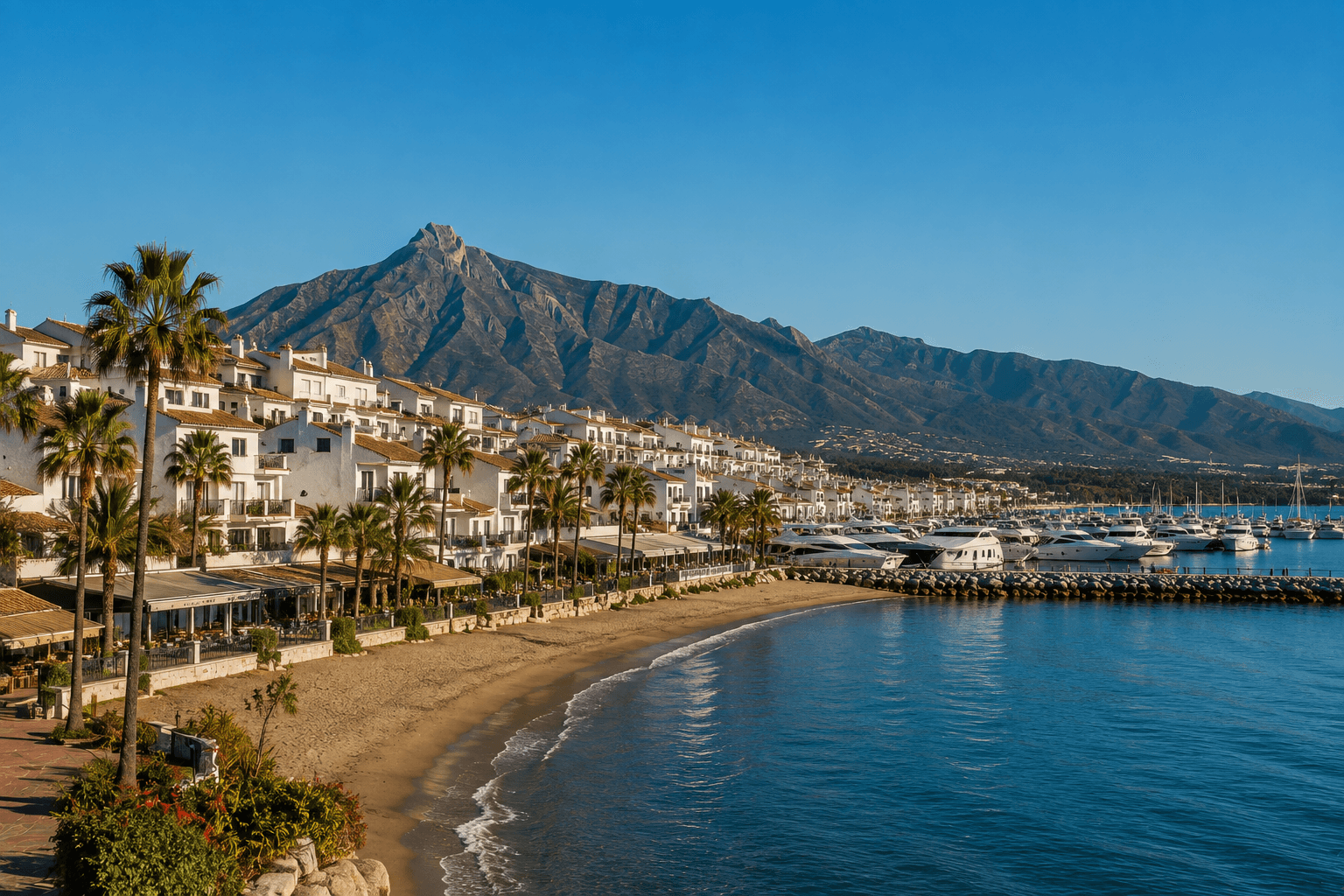
The place to be
The place to be
Marbella: where Danish capital has already chosen to be
Marbella: where Danish capital has already chosen to be
The Costa del Sol is today one of Spain’s leading foreign capital hubs, and the Danish and Scandinavian community is one of the most established: thousands of Danish residents, international and Scandinavian schools, Nordic business clubs, and a business ecosystem accustomed to working with investors from Northern Europe. Direct connection with Denmark. Direct flights between Copenhagen and Billund and Málaga Airport throughout the year make it possible to manage an investment in Spain without friction: a morning meeting in Marbella, dinner in Denmark. A real business ecosystem. Beyond tourism, the Costa del Sol is home to technology (Málaga TechPark), professional services, real estate, healthcare, and high-end hospitality — sectors where Danish capital is especially active. Quality of life as a business asset. For relocated executives and their families, the combination of climate, safety, international schools, and services turns the relocation into a talent retention advantage, not a sacrifice. Access to the European market. Operating from Spain means operating from the EU, with access to the single market and to Latin America as a natural extension.
The Costa del Sol is today one of Spain’s leading foreign capital hubs, and the Danish and Scandinavian community is one of the most established: thousands of Danish residents, international and Scandinavian schools, Nordic business clubs, and a business ecosystem accustomed to working with investors from Northern Europe. Direct connection with Denmark. Direct flights between Copenhagen and Billund and Málaga Airport throughout the year make it possible to manage an investment in Spain without friction: a morning meeting in Marbella, dinner in Denmark. A real business ecosystem. Beyond tourism, the Costa del Sol is home to technology (Málaga TechPark), professional services, real estate, healthcare, and high-end hospitality — sectors where Danish capital is especially active. Quality of life as a business asset. For relocated executives and their families, the combination of climate, safety, international schools, and services turns the relocation into a talent retention advantage, not a sacrifice. Access to the European market. Operating from Spain means operating from the EU, with access to the single market and to Latin America as a natural extension.
The Costa del Sol is today one of Spain’s leading foreign capital hubs, and the Danish and Scandinavian community is one of the most established: thousands of Danish residents, international and Scandinavian schools, Nordic business clubs, and a business ecosystem accustomed to working with investors from Northern Europe. Direct connection with Denmark. Direct flights between Copenhagen and Billund and Málaga Airport throughout the year make it possible to manage an investment in Spain without friction: a morning meeting in Marbella, dinner in Denmark. A real business ecosystem. Beyond tourism, the Costa del Sol is home to technology (Málaga TechPark), professional services, real estate, healthcare, and high-end hospitality — sectors where Danish capital is especially active. Quality of life as a business asset. For relocated executives and their families, the combination of climate, safety, international schools, and services turns the relocation into a talent retention advantage, not a sacrifice. Access to the European market. Operating from Spain means operating from the EU, with access to the single market and to Latin America as a natural extension.


Why Marbella and not Madrid or Barcelona to manage my investment in Spain?
Madrid and Barcelona are major financial centres, but Marbella is where the international investment community that operates in Spain actually lives and works. The Costa del Sol concentrates more active foreign capital per square kilometre than any other Spanish region outside the two main capitals — and the Danish and Scandinavian community is one of the most established in the area. Being here is not an aesthetic choice: it means being where the clients, the assets and the opportunities are.

Is there really a Danish business community on the Costa del Sol?
Yes, and it is far more substantial than most people realise. Marbella and its surroundings are home to thousands of Danish and Scandinavian residents, international schools with Nordic programmes, active Scandinavian business associations and a network of Northern European entrepreneurs with investments across very diverse sectors: real estate, hospitality, technology, healthcare and professional services. This is not a holiday community — it is a community that works, invests and generates real business activity.

Is it easy to travel between Denmark and Marbella to oversee an investment?
Remarkably easy for an overseas investment. Málaga Airport operates direct flights from Copenhagen (CPH) and Billund (BLL) on a regular year-round schedule, with flight times under three hours. In practice, managing an investment on the Costa del Sol from Denmark is more convenient than doing so from many European destinations that are geographically closer but less well connected. A morning meeting in Marbella and dinner in Copenhagen the same evening is entirely realistic.
Which business sectors are most active and attractive for investors on the Costa del Sol?
The Costa del Sol has spent decades diversifying its economy well beyond tourism. The sectors with the highest international investment activity are residential and commercial real estate, premium hospitality and food and beverage, technology and digital services (with Málaga TechPark as a European reference hub), health and wellness, and professional and financial services. For the Danish investor, all of these offer an unusual combination: assets priced competitively against Scandinavian benchmarks, sustained demand and local teams with experience working alongside Nordic capital.
What are the advantages of Marbella for my relocated employees or executives?
The quality of life on the Costa del Sol is a genuine talent retention argument, not a peripheral benefit. Exceptional climate, safety, world-class healthcare infrastructure, strong international education offering (including schools working in English and Nordic languages), and an established community that makes settling in easy for families from day one. Additionally, the special tax regime for inbound workers (Beckham Law) allows relocated Danish executives to pay a flat 24% rate on their employment income for six tax years — a very significant saving compared to Danish marginal rates.
What is Marbella's position as a foreign investment destination within Spain?
Marbella is consistently one of the Spanish municipalities with the highest volume of foreign investment per capita. The city attracts capital from over 60 nationalities and has a legal, notarial and financial infrastructure that is accustomed to operating in English and handling complex international transactions. For a Danish investor, this means finding a local ecosystem that already understands the rules of cross-border investment — which is not the case in smaller or less internationalised markets.
Why Marbella and not Madrid or Barcelona to manage my investment in Spain?
Madrid and Barcelona are major financial centres, but Marbella is where the international investment community that operates in Spain actually lives and works. The Costa del Sol concentrates more active foreign capital per square kilometre than any other Spanish region outside the two main capitals — and the Danish and Scandinavian community is one of the most established in the area. Being here is not an aesthetic choice: it means being where the clients, the assets and the opportunities are.
Is there really a Danish business community on the Costa del Sol?
Yes, and it is far more substantial than most people realise. Marbella and its surroundings are home to thousands of Danish and Scandinavian residents, international schools with Nordic programmes, active Scandinavian business associations and a network of Northern European entrepreneurs with investments across very diverse sectors: real estate, hospitality, technology, healthcare and professional services. This is not a holiday community — it is a community that works, invests and generates real business activity.
Is it easy to travel between Denmark and Marbella to oversee an investment?
Remarkably easy for an overseas investment. Málaga Airport operates direct flights from Copenhagen (CPH) and Billund (BLL) on a regular year-round schedule, with flight times under three hours. In practice, managing an investment on the Costa del Sol from Denmark is more convenient than doing so from many European destinations that are geographically closer but less well connected. A morning meeting in Marbella and dinner in Copenhagen the same evening is entirely realistic.
Which business sectors are most active and attractive for investors on the Costa del Sol?
The Costa del Sol has spent decades diversifying its economy well beyond tourism. The sectors with the highest international investment activity are residential and commercial real estate, premium hospitality and food and beverage, technology and digital services (with Málaga TechPark as a European reference hub), health and wellness, and professional and financial services. For the Danish investor, all of these offer an unusual combination: assets priced competitively against Scandinavian benchmarks, sustained demand and local teams with experience working alongside Nordic capital.
What are the advantages of Marbella for my relocated employees or executives?
The quality of life on the Costa del Sol is a genuine talent retention argument, not a peripheral benefit. Exceptional climate, safety, world-class healthcare infrastructure, strong international education offering (including schools working in English and Nordic languages), and an established community that makes settling in easy for families from day one. Additionally, the special tax regime for inbound workers (Beckham Law) allows relocated Danish executives to pay a flat 24% rate on their employment income for six tax years — a very significant saving compared to Danish marginal rates.
What is Marbella's position as a foreign investment destination within Spain?
Marbella is consistently one of the Spanish municipalities with the highest volume of foreign investment per capita. The city attracts capital from over 60 nationalities and has a legal, notarial and financial infrastructure that is accustomed to operating in English and handling complex international transactions. For a Danish investor, this means finding a local ecosystem that already understands the rules of cross-border investment — which is not the case in smaller or less internationalised markets.